

Saraswati Shodh Abhiyan
Progress of Saraswati Shodh
Field expeditions and scientific analysis revealed important clues about the ancient course of the Saraswati River.
The expedition covered nearly 4000 kilometers across Himachal Pradesh, Haryana, Rajasthan and Gujarat.
The journey began on 19 November 1985 from Delhi after a press conference at the Boat Club and continued through various historically important regions.
Researchers travelled using two Matador vehicles, conducting field observations, studying geological formations and identifying archaeological sites along the suspected route of the ancient Saraswati river.
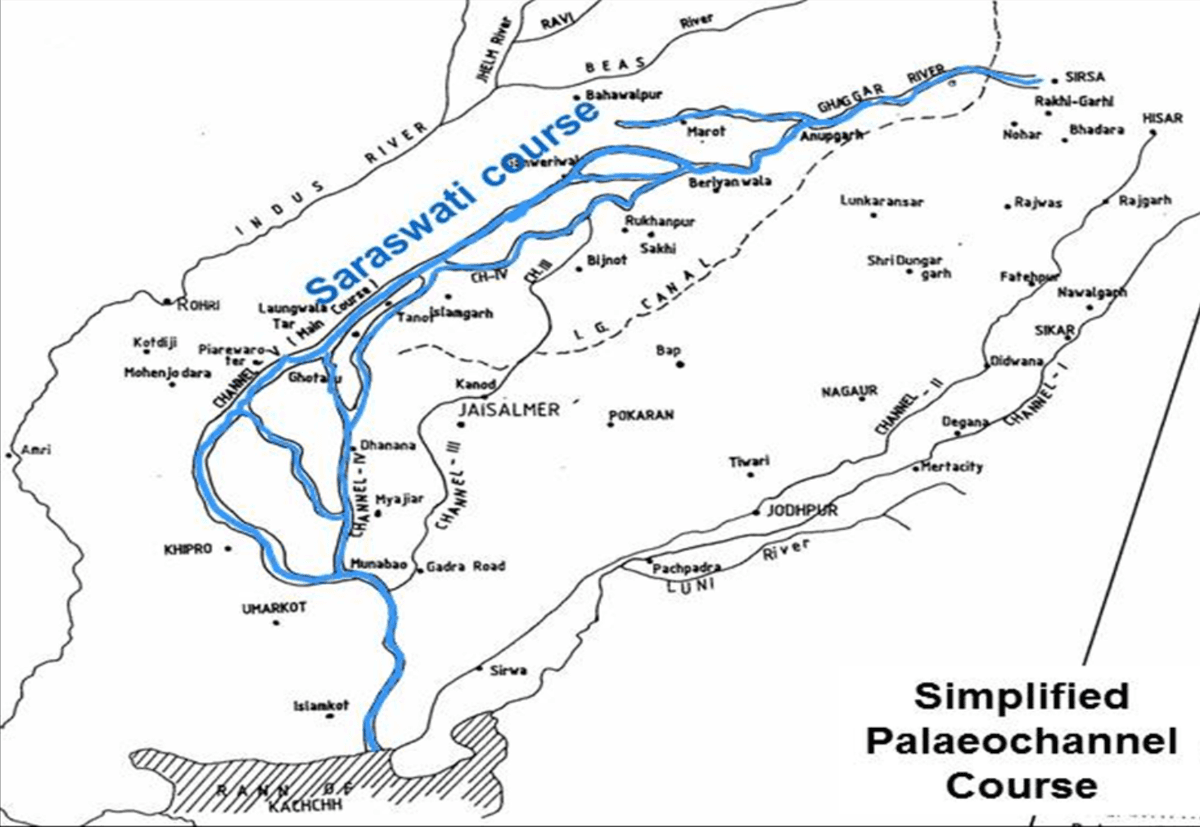
Landsat Observations
Landsat satellite images revealed ancient river palaeochannels across north-western Rajasthan and Punjab.
According to these images, the Ghaggar river system entering the plains was nearly 6–8 km wide, suggesting the presence of a major ancient river.
The dried belt labelled as Y-2 corresponds to the ancient river Chautang which once fed the Ghaggar river near Suratgarh.
Geological Observations
Researchers observed that the Sutlej river was once the primary feeder of the Saraswati–Ghaggar system.
Over time, tectonic shifts caused the Sutlej to move westwards, drastically reducing water supply to the Saraswati river system.
Similarly the Beas river changed its course near Ropar, further weakening the Saraswati flow.
Geological evidence suggests that Saraswati once flowed parallel to the Indus river but further east before eventually draining into the Arabian Sea through the Rann of Kutch.