

Astronomical Heritage
Dongla – Significance in Standard Time Calculations
The discovery at Dongla highlights India's deep knowledge of astronomy and time measurement traditions rooted in Vedic science.
Vedic literature reveals that ancient India possessed extensive knowledge of Astronomy and Astrology. The city of Ujjain historically held a central position in these disciplines.
Bhagwan Shri Krishna is believed to have studied astrology and astronomy under Guru Sandipani at the Sandipani Ashram near Ujjain.
Ujjain’s historic Kaliyadeh Palace was once a Surya Temple dedicated to the Sun God and still contains a statue of Surya.
Acharya Varah Mihir, one of the nine gems of King Vikramaditya’s court, belonged to Kayatha near Ujjain where a prominent Surya temple once existed.
According to the Linga Purana, Ujjain is described as the Nabhi (navel) of the world, indicating its central position in cosmological and astronomical traditions.
Even today Ujjain is considered the centre for calculating time while preparing traditional Panchang (Hindu almanacs).
Understanding the Summer Solstice
The Tropic of Cancer is an imaginary line located at approximately 23°27′ North latitude in the Northern Hemisphere.
Earth's axial tilt oscillates between 22.1° and 24.5° over a cycle of roughly 41,000 years.
On 21st June, during the Summer Solstice, the sun's rays fall exactly perpendicular on the Tropic of Cancer.
Historically, the Tropic of Cancer once passed through the city of Ujjain near the Kark Rajeshwar Temple.
Now it passes through Dongla village.
Discovery of the Dongla Point
In 1985, Dr. Vishnu Shridhar Wakankar identified the exact point at Dongla village.
The coordinates of this location are:
- Latitude: 23° 26′ 42.91″ N
- Longitude: 75° 45′ 43.31″ E
- Height: 515 meters above sea level
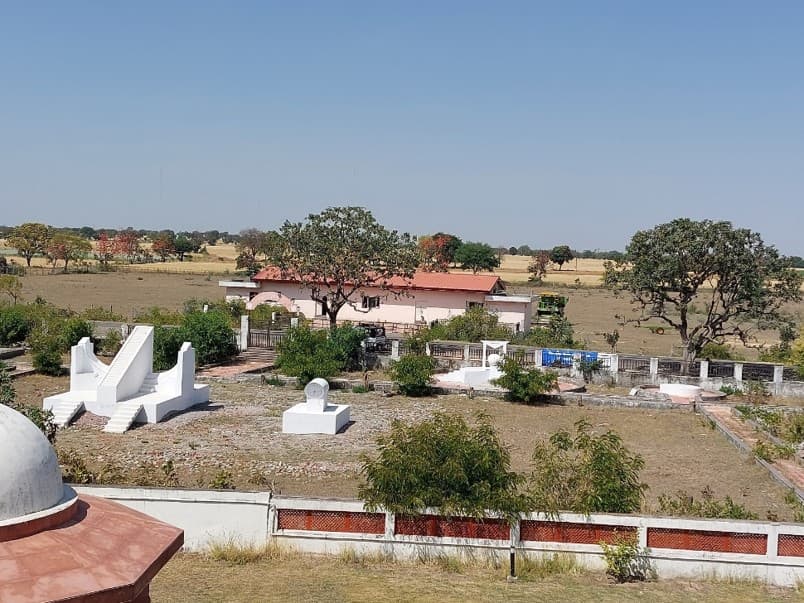
Aerial view of Dongla showing the intersection point of the Tropic of Cancer.
At this location, during the Summer Solstice, the sun stands directly overhead.
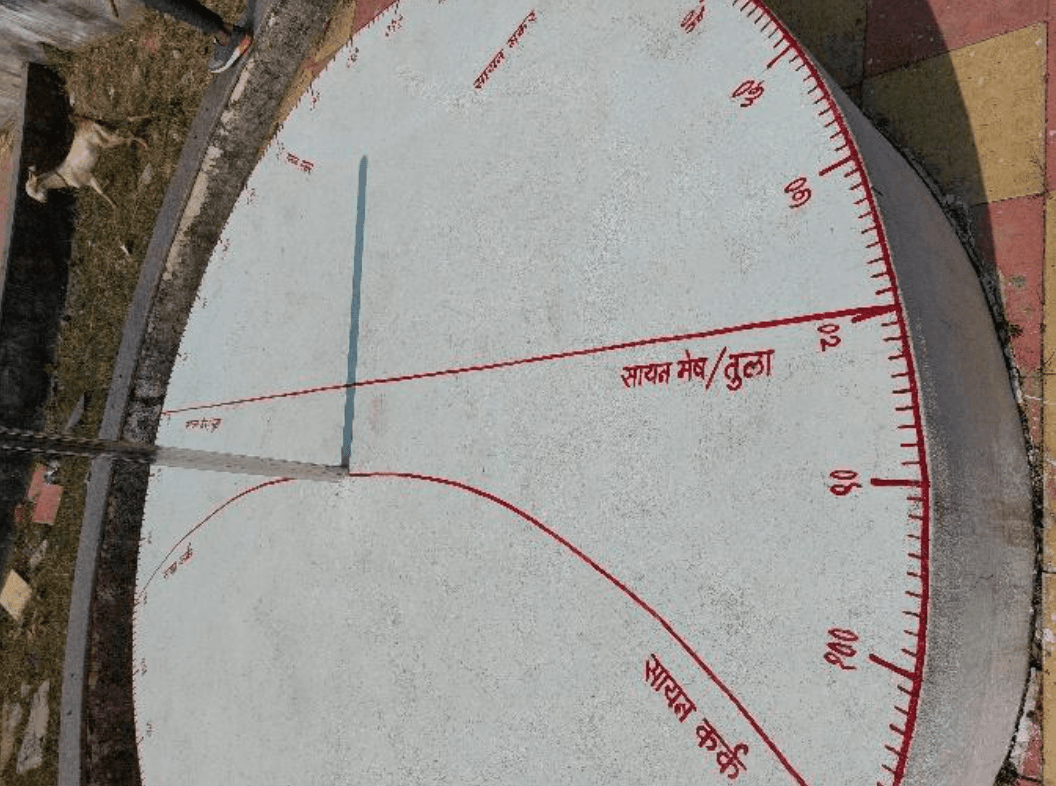
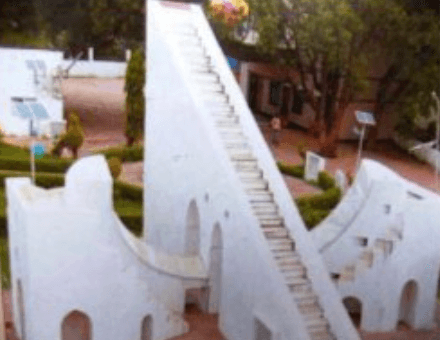
Samrat Yantra
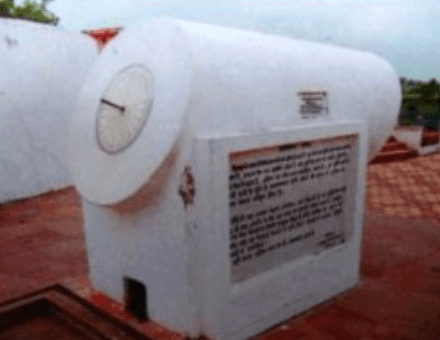
Nadivalay Yantra
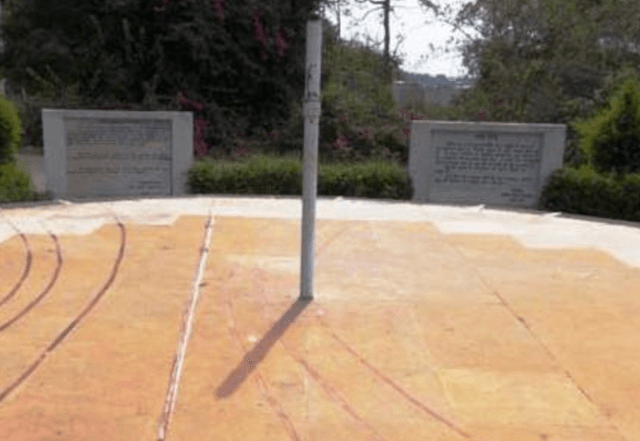
Shanku Yantra
Significance of Dongla in Time Measurement
Today the world follows the Greenwich Meridian.
However, Greenwich has no major astronomical significance.
Dongla lies at intersection of Tropic of Cancer and ancient Indian meridian.
Ancient Astronomical Instruments
Traditional instruments installed include Shanku, Bhitti, Nadi, Samrat and Bhaskar Yantra.
These reflect advanced knowledge of ancient Indian astronomy.
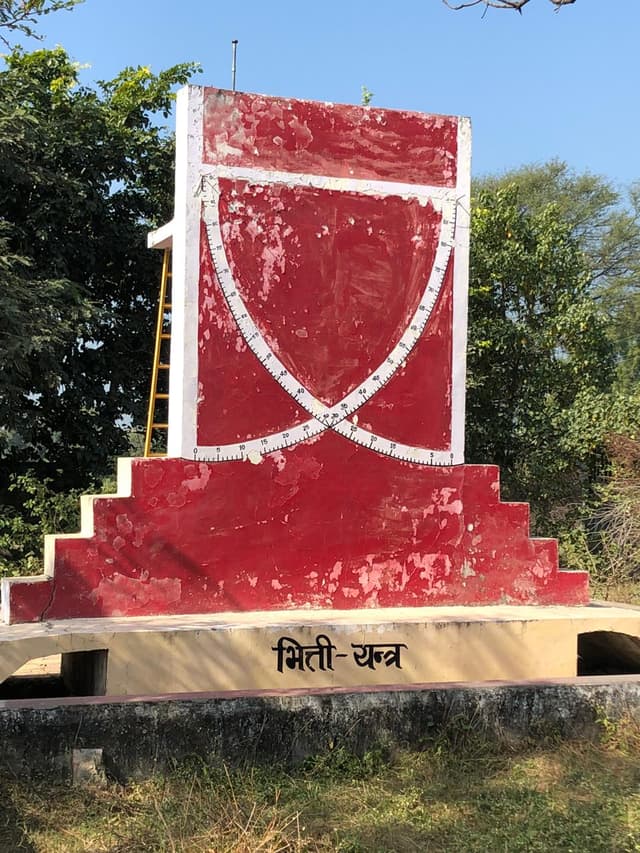
Bhitti Yantra
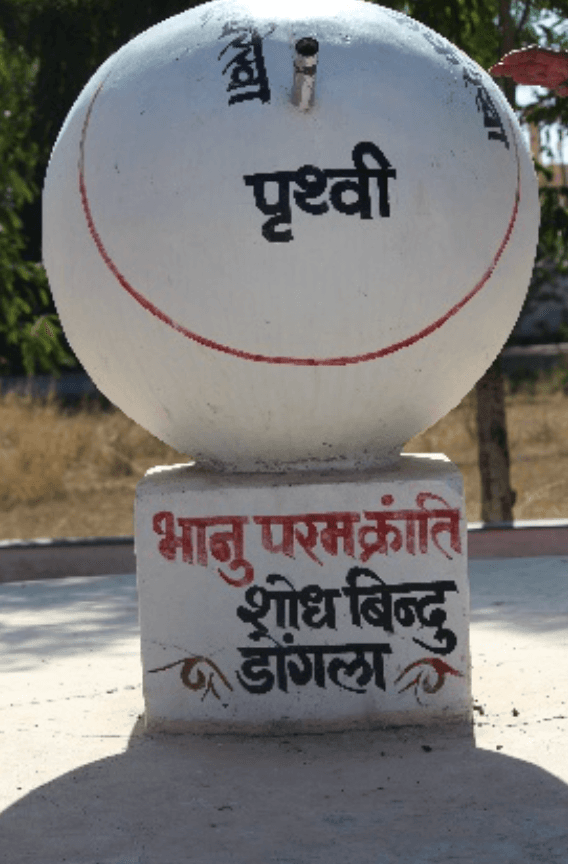
Bhaskar Yantra
DMT instead of GMT
Dr. Wakankar proposed Dongla as Prime Meridian.
He suggested using Dongla Meridian Time instead of GMT.