

Saraswati Shodh Abhiyan
Final Conclusions
Findings from the expedition suggested that the Vedic Saraswati River was a major river system flowing from the Himalayas into the Arabian Sea.
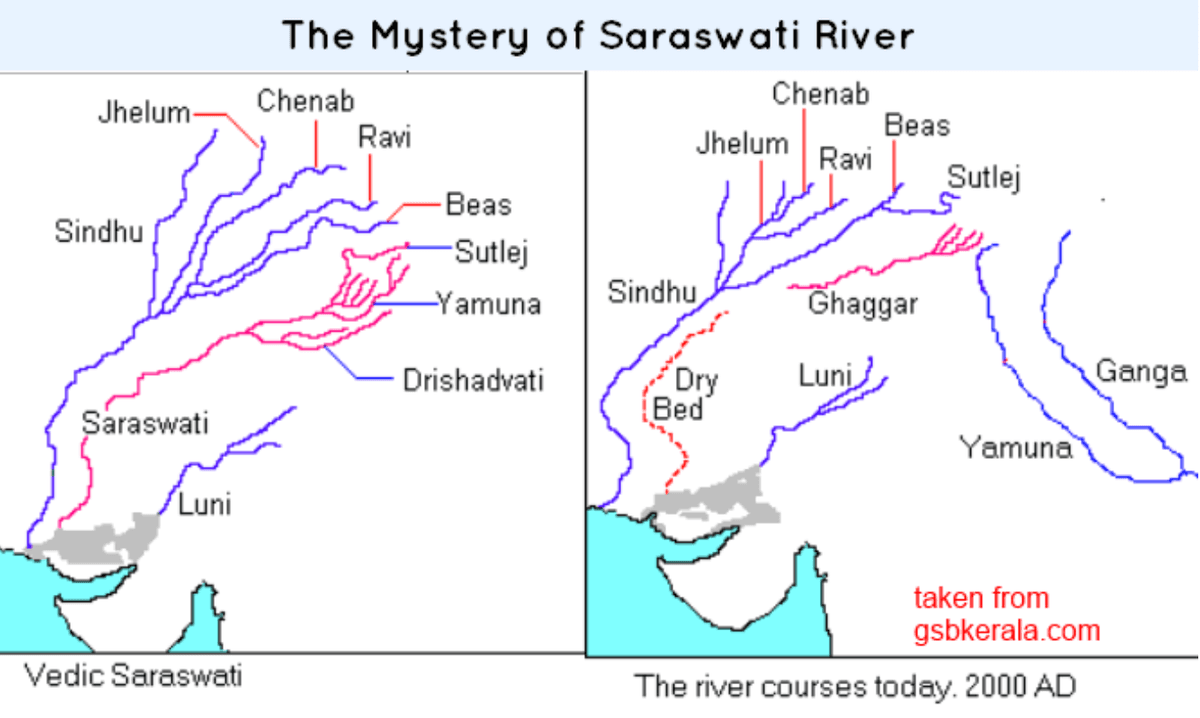
Ancient Course of Saraswati
According to the findings of the Saraswati Shodh Abhiyan, the river originated near Adi Badri in the Himalayas and flowed through the plains of northern India.
The river passed through several historically important regions including Kurukshetra, Sirsa, Hansi, Kalibanga, Anupgarh and Suratgarh before finally reaching the Rann of Kutch.
Key Findings of the Expedition
- The Vedic Saraswati River once flowed into the plains from the Himalayas with a width of nearly 6–8 km.
- Numerous settlements referenced in Vedic literature correspond with archaeological sites along the river.
- More settlements were discovered along Saraswati than along the Indus River.
- Fossils of fishes and aquatic species discovered in deep geological layers suggest the presence of ancient water bodies in the region.
- Geological shifts during the Pleistocene–Holocene period gradually caused the river system to dry out.
A New Understanding of Civilization
Based on archaeological and geological findings, Dr. Vishnu Shridhar Wakankar proposed that the so-called Indus Valley Civilization should more accurately be referred to as the Sindhu–Saraswati Civilization.
The culmination of the Saraswati Shodh Abhiyan took place at Somnath, symbolizing the completion of an extraordinary journey to rediscover one of the most significant rivers mentioned in ancient Indian literature.