

Rock Art
Art has always been a powerful medium through which humans express their observations, emotions, aspirations and dreams. One of the earliest forms of artistic expression is Rock Art.
Rock art has been discovered across the world including USA, South Africa, France, Spain and Australia. The famous cave paintings of Altamira in Spain discovered in 1880 are estimated to be around 25,000 years old.
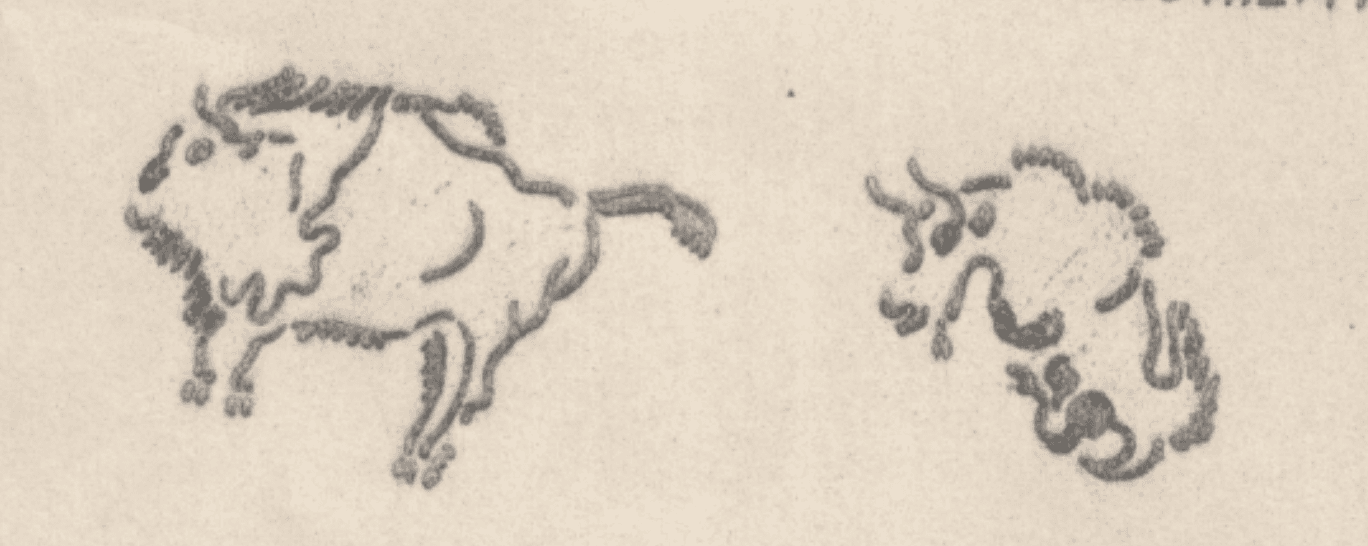
Altamira Cave Paintings – Spain (c. 25,000 years BP)
Rock Art Discovery in India
The first documented discovery of rock art in India was made in 1880 by J. Cockburn and A. Carlyle near Mirzapur.
The painting depicts a group of hunters attacking a wild rhinoceros, likely belonging to the Copper Age.
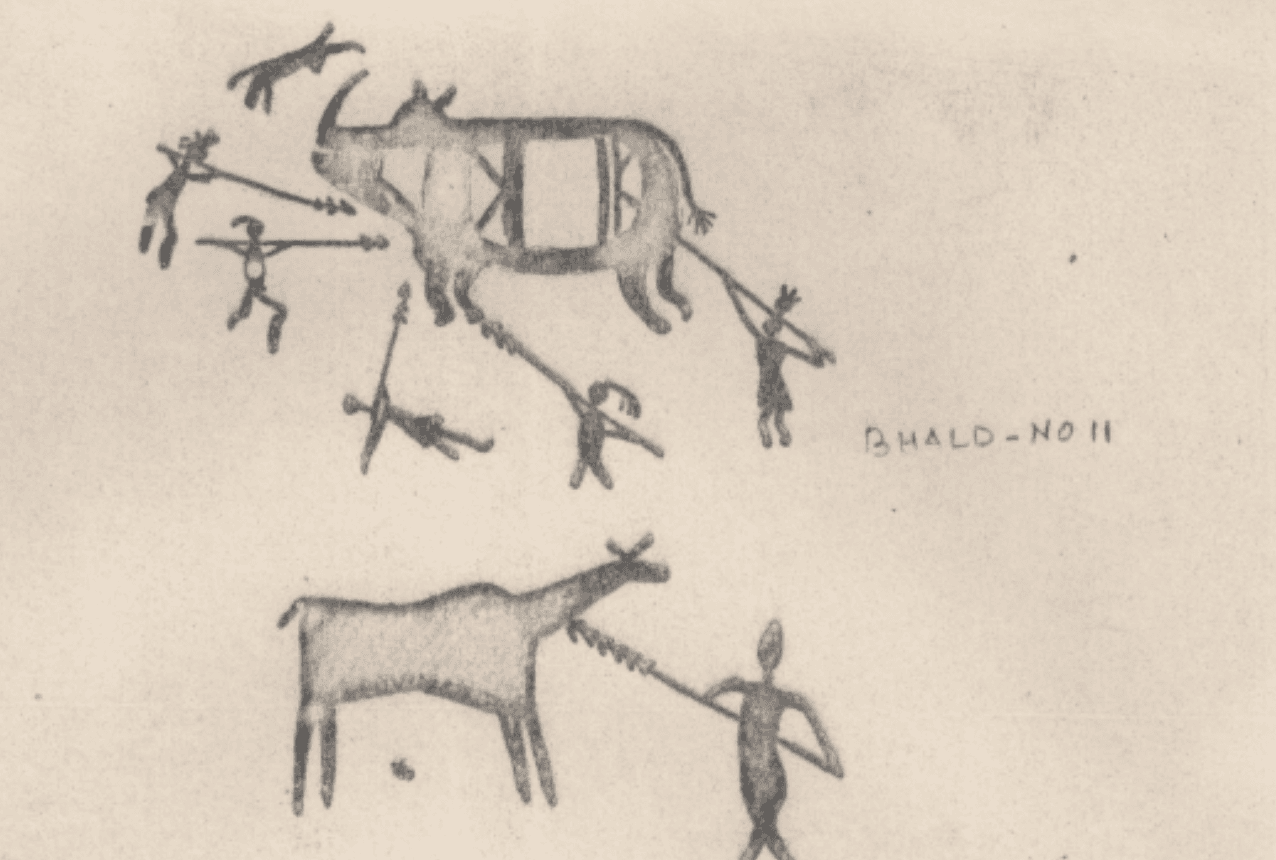
Rock painting discovered near Mirzapur depicting hunting of a wild rhinoceros
Bhimbetka Rock Shelters
The richest collection of rock art in India has been found in Madhya Pradesh particularly in Bhimbetka, Bhojpur, Bhopal, Budhni, Hoshangabad, Raisen and Sanchi.
The world's largest concentration of rock shelters exists at Bhimbetka, located about 55 km south of Bhopal.
Dr. Vishnu Shridhar Wakankar discovered Bhimbetka in 1957.
In 2003, Bhimbetka was declared a UNESCO World Heritage Site.
For detailed documentation on the significance, conservation, and heritage value of Bhimbetka, refer to the official UNESCO World Heritage nomination dossier.
View UNESCO Nomination Document →Site Details
The rock shelters cover an area of about 1850 hectares inside the Ratapani Wildlife Sanctuary (now renamed as Wakankar Abhayaranya).
Around 730 rock shelters exist here with nearly 500 paintings.
Bhimbetka is unique because it shows cultural continuity from the Paleolithic period to the historic Gond kingdom.
Significance of Bhimbetka
a) Archaeological Significance
Bhimbetka is one of the rare primary prehistoric sites in the world, providing direct evidence of early human settlement. Discoveries from nearby regions such as Hathnora in the Narmada valley indicate human presence dating back over 100,000 years. Unlike secondary sites, Bhimbetka preserves cultural layers in their original context.
b) Cultural Continuity
The site demonstrates an unbroken sequence of human occupation from the Palaeolithic period to the Mediaeval era. This continuity is visible not only in archaeological remains but also in the traditions of local tribal communities such as the Gonds, Pradhans and Korkus, reflecting a deep connection between past and present.
c) Rock Art & Human Expression
With over 700 rock shelters and hundreds of paintings, Bhimbetka represents one of the largest and richest concentrations of prehistoric art in the world.
d) Global Importance
Bhimbetka stands out globally due to its scale, preservation and continuous usage across millennia.